November 12, 2026
How to Choose Culturally Inspired Wall Decor That Honors Your Heritage
By @thegallerynook
Start with what speaks to you
Selecting wall decor that reflects a cultural tradition is different from picking a generic print. You are not just matching a color scheme or filling an empty wall. You are bringing a visual story into your home, one that connects to a deeper sense of identity and belonging. Before you browse, take a moment to think about what draws you to a particular piece. Is it the colors, the patterns, the subject matter? Understanding your own response helps you filter out work that looks nice but carries no personal meaning.
Many people discover African diaspora art through family history or regional traditions. The Gullah Geechee art style, for example, comes from a community with roots in the Lowcountry of the southeastern United States. Its visual language includes motifs from the sea islands, basket weaving patterns, and symbols of resilience. If that tradition resonates with you, it can anchor a collection that tells a coherent story rather than a random assortment of prints.
Check the cultural context of the work
Not every piece labeled as cultural art is created with authentic knowledge. Some designs borrow surface elements without understanding the meaning behind them. When you look at a print or canvas, ask yourself whether the artist seems to understand the tradition they are referencing. Look for details that suggest familiarity: specific symbols, historically accurate clothing or tools, a sense of place. For instance, folk art from the African diaspora often uses visual symbolism tied to spiritual beliefs, community life, or historical events. A piece that includes rice baskets, sweetgrass, or indigo dyes may carry a specific regional meaning that a generic African-themed print would miss.
If you are drawn to a particular cultural heritage, learn a little about its iconography before you buy. That knowledge helps you recognize work that respects the tradition versus work that merely borrows its aesthetic. It also makes the piece more meaningful when you explain it to guests or pass it down to the next generation.

Consider the role of visual symbolism in your space
Wall art does more than decorate. It shapes the mood of a room and can reinforce values you want to live by. A piece that celebrates resilience, family, or spiritual strength can serve as a daily reminder of what matters to you. When you evaluate a print or canvas, think about what its symbols communicate. A depiction of a Gullah Geechee praise house, for example, speaks to community faith and perseverance. A textile pattern from West Africa might represent ancestral connections or social status.
Be honest about whether the piece fits the room's purpose. A bold, narrative-driven artwork works well in a living room or hallway where people gather. A quieter, more abstract piece might suit a bedroom or study. The scale matters too: a large canvas with intricate details can dominate a small wall, while a series of smaller prints can create a gallery effect that invites closer inspection.
Look for quality materials and craftsmanship
The longevity of your wall decor depends on how it is made. Canvas prints should have a sturdy frame and a finish that resists fading. Posters need archival-quality paper that won't yellow quickly. Check the product descriptions for details about the printing process and materials. A giclée print, for instance, uses pigment-based inks that last longer than standard dye inks. The frame or stretcher bars should be solid, not flimsy, so the piece hangs straight over time.
If the work includes hand-finished elements, such as added texture or hand-painted details, consider whether that craftsmanship adds to the piece's value. Handmade elements often justify a higher price because they connect you to the artist's process. For machine-printed reproductions, look for clarity and color accuracy. A blurry or off-color print will disappoint you no matter how meaningful the subject.
Evaluate the authenticity of the cultural narrative
When you choose culturally inspired art, you are also choosing a story. The best pieces tell that story with honesty. Ask yourself whether the artwork presents a historical narrative or cultural tradition in a respectful way. Does it romanticize poverty or hardship? Does it reduce a complex culture to a single stereotype? Authentic work tends to show people as individuals, not as symbols. It includes everyday life alongside ceremonial moments. It acknowledges struggle without making suffering the only subject.
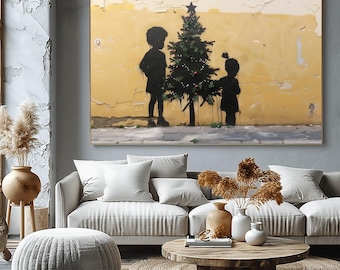
For African American art and Black art, this is especially important. The history of the African diaspora includes trauma, but it also includes joy, creativity, and survival. A good piece of wall decor can hold all of those things at once. Look for art that feels balanced and nuanced, not one-dimensional.
Trust your instincts about color and composition
Technical quality and cultural authenticity matter, but so does your emotional reaction. A piece might check every box on paper yet leave you cold when you see it in person. Pay attention to how the colors work with your existing decor. A vibrant print with warm earth tones can energize a neutral room. A monochrome piece might bring calm to a busy space. The composition should guide your eye naturally, not feel cluttered or unbalanced.
If you are buying online, look at multiple images of the same piece. Check the dimensions against a wall in your home. Some sellers offer a preview tool that shows the art on a mock wall, which can help you visualize scale. When the piece arrives, live with it for a few days before deciding if it stays. Sometimes a work that looked perfect in a thumbnail feels wrong in your actual space, and that is okay.
Think about how the art connects to your broader collection
A single piece can stand alone, but many people end up with several artworks over time. Consider whether the piece you are buying now will work with future additions. If you collect multiple pieces from the same cultural tradition, they will likely share a visual vocabulary and feel cohesive. If you mix traditions, look for a unifying element such as a common color palette, similar framing, or a consistent scale.
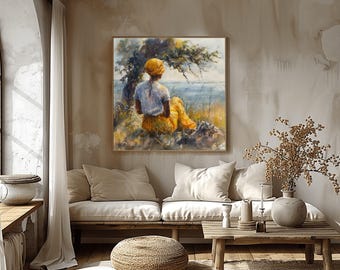
Gullah Geechee art, for instance, often features coastal landscapes, basket patterns, and figures in motion. A print of a sweetgrass basket weaver could pair well with a textile piece from the same region. A more abstract work inspired by the same cultural heritage might use the same blues and greens but with a modern composition. Mixing traditional and contemporary interpretations of the same tradition can create a dynamic and personal display.
Make sure the piece resonates with your identity
Ultimately, the art you choose should feel like yours. It does not have to match everyone else's taste or fit a trend. If a piece reminds you of your grandmother's kitchen or the landscape where you grew up, that personal connection matters more than any external validation. Cultural heritage is not a commodity to be consumed and discarded. It is a living thing that you carry forward. The artwork you hang on your wall can be a small but meaningful way of honoring that inheritance.
Take your time. Let the right piece find you. When it does, you will know because it will feel like coming home.
❧